Well water treatment

Well water treatment in Santa Barbara.

A private supply has no utility upstream and no report to read. The system gets sized on what is actually coming out of your ground, and that changes house to house.

What it takes care of

What a well water treatment system takes care of

And when the assessment finds something in your supply these stages do not cover, you get pointed at what does.

Orange staining

In sinks, tubs, toilets and laundry, from iron in the supply.

The rotten egg smell

Sulfur that hits the hot water first and rides into every shower.

Grit and sediment

In aerators, screens and the bottom of the water heater.

Dealing with something else?

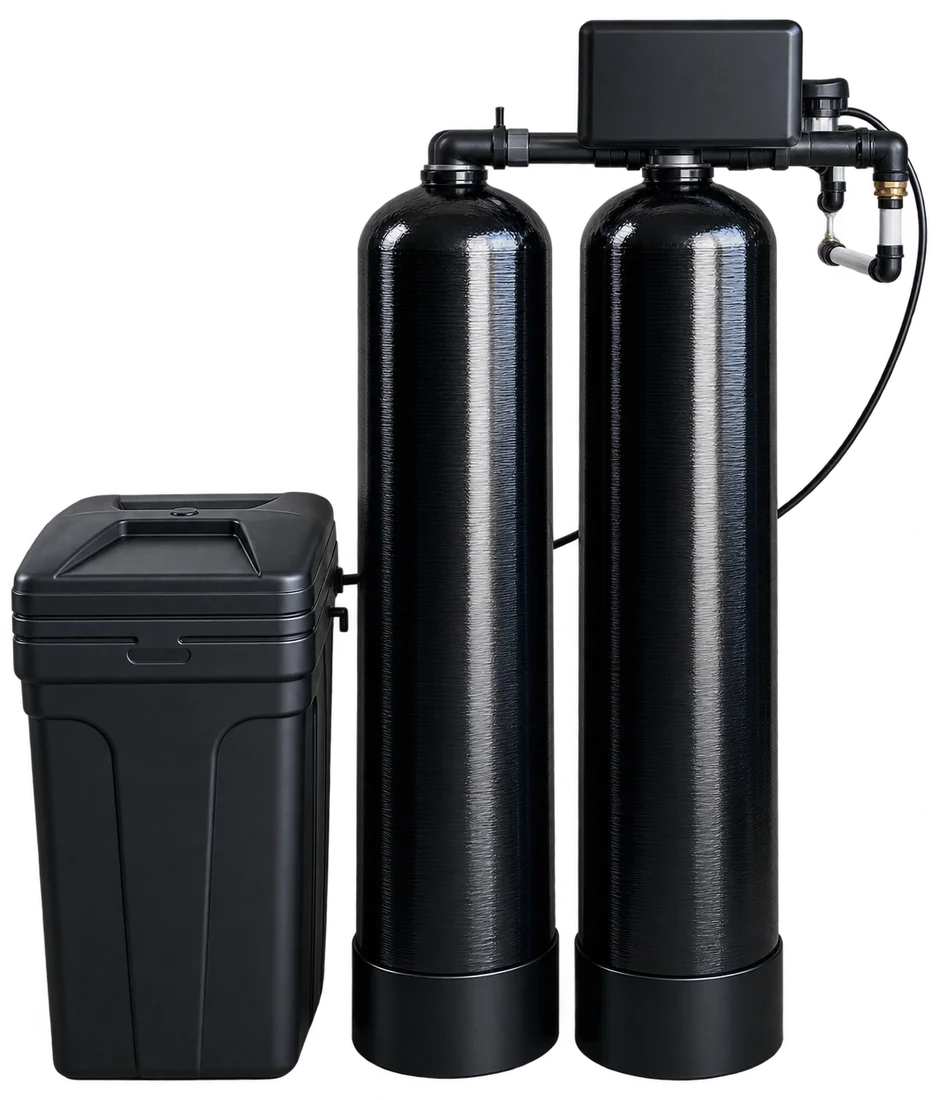
Dual tank well water treatment system

A dual tank well setup. Yours is configured after the assessment.

The system

Stages picked for your supply

There is no one well system, because there is no one well. Iron, sulfur, sediment and hardness turn up in different mixes, so the stages get picked after the assessment, not before. Every setup shares two things: it sits where the line enters the house, and it is sized on your supply.

Drinking water

The kitchen sink still gets its own reverse osmosis stage, and the assessment folds it into your setup.

The number

Sized and priced on its own

Well setups do not share the city water number, because the stages depend on the supply. You get yours the same way, in writing, after a call about what your water is showing you.

Get Your Free Water Assessment

Built for a well

Every well is different, so every system is too

Two homes on the same road can pull very different water. The lineup comes from what yours is showing you, through the year.

  • Sized on your supply. Not on a stock model or a neighbour's setup.
  • Only the stages it needs. A supply that needs one tank gets one tank.
  • Drinking water at the tap. Reverse osmosis folded into the setup.

Nobody upstream is treating a well but you.

Good to know

Well water treatment in Santa Barbara: what to know

Iron and orange staining

Iron dissolves out of the ground into well water. It is clear coming out of the tap, then turns orange or brown once it meets air, which is why it shows up as stains on fixtures and laundry.

It is one of the most common reasons a well owner calls.

Sulfur and the rotten egg smell

A smell of rotten eggs, strongest in hot water, points at sulfur. It can come and go with the seasons and the water table.

It is handled at the point of entry so the smell does not reach the showers.

Sediment and grit

Sand and grit from the well wear out valves and clog aerators and screens. A sediment stage catches it before it reaches the rest of the system.

It also protects the stages that come after it.

Hardness on a well

Well water is often hard as well as everything else, and the scale it leaves is the same as on city water.

When it is, softening goes into the lineup alongside the other stages. How softening works.

Questions

Well water treatment questions

Anything else goes in your assessment request, and the answer comes back with your number.

The water table moves with the seasons, and what dissolves into it moves too. A supply that runs clear in October can stain in April, which is why the system gets sized on the swings and not on one good day.

Only the stages your water calls for. The assessment decides the lineup, and a supply that needs one tank gets one tank.

No. Most well owners have not. Tell us what you are seeing at the taps and through the year, and the assessment starts from there.

No. A well is sized and priced on its own, because the stages depend on the supply. Your number comes in writing after the assessment.

Yes. The kitchen sink gets its own reverse osmosis stage, folded into your setup.

All three systems

Compare home water treatment systems

Start with a look at your own water

The assessment is free. Leave a name and a number, or just call.

Get Your Free Water Assessment

Or call (820) 777-3525

See the full service area